
Flax production in France
A heresy of the flax
France is Europe's largest flax producer. If you drive through Normandy in June, the beautiful flax fields are in bloom with delicate light blue flowers on strong stems. Stunningly beautiful.
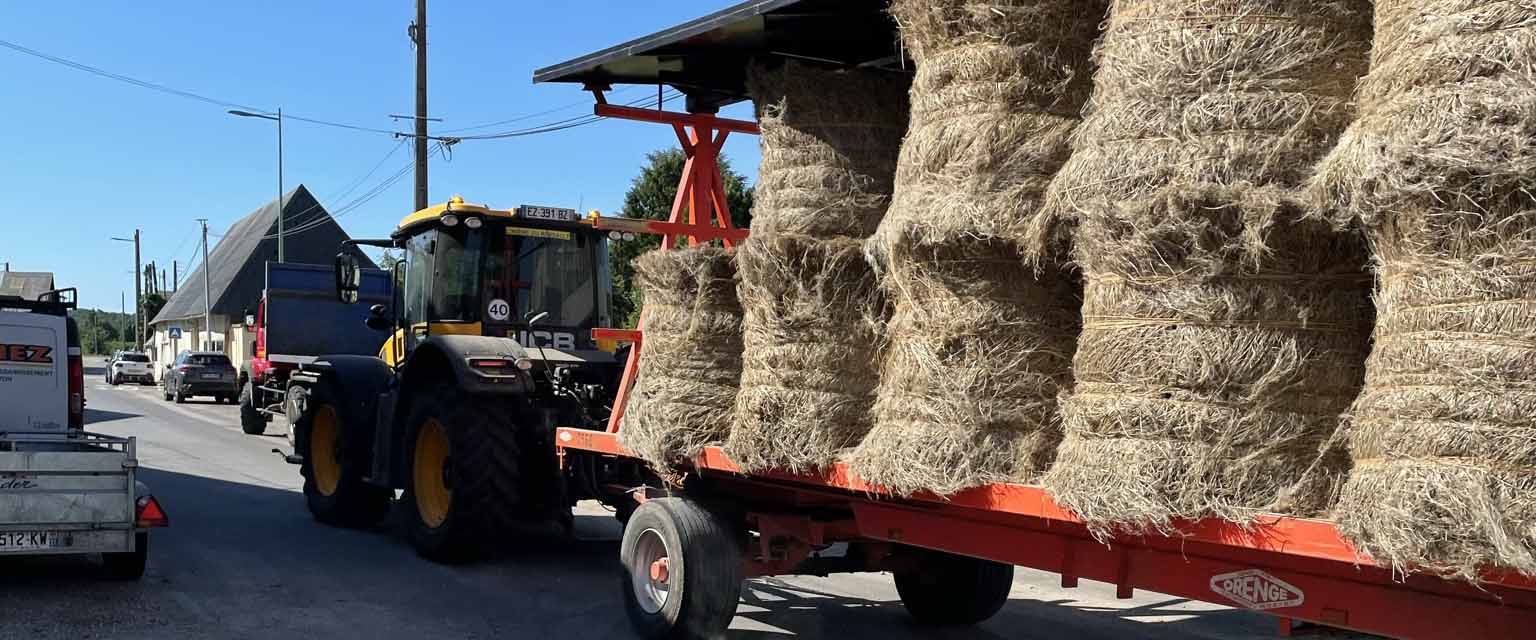
In July we visited the Liniere du Ressault flax mill on our trip through Normandy. It was at the end of July that the flax was harvested, dried in the field and brought to the mill in huge bales.
We were actually looking for a flax spinning or weaving mill, but although France produces 50% of the world's flax, almost all flax is only skeined, i.e. peeled and shorn in France, but spun and woven abroad, typically in the northern part of Africa. From here, the yarn is typically sent to Italy, where it is woven into fabrics.
Processing is slowly returning to France as demand for flax increases, but we only managed to find one weaving mill, which was on summer vacation.
Facts about flax
Flax production in France dates back to history and is still an important basis for the country's agricultural sector. The largest regions for flax production are Normandy and Brittany, where the climate is ideal for flax cultivation.
The flax plant is primarily grown for its long, strong fibers from its stems. The fibers are used to make textiles, thread, rope, and even insulation.
Flax is known for its natural strength and breathability, making it popular in the fashion industry for the production of lightweight summer textiles and in the construction industry as an environmentally friendly alternative for insulation.
Flax seeds are pressed into linseed oil, linseed oil or used as seeds in baked goods. All parts of the plant are used.
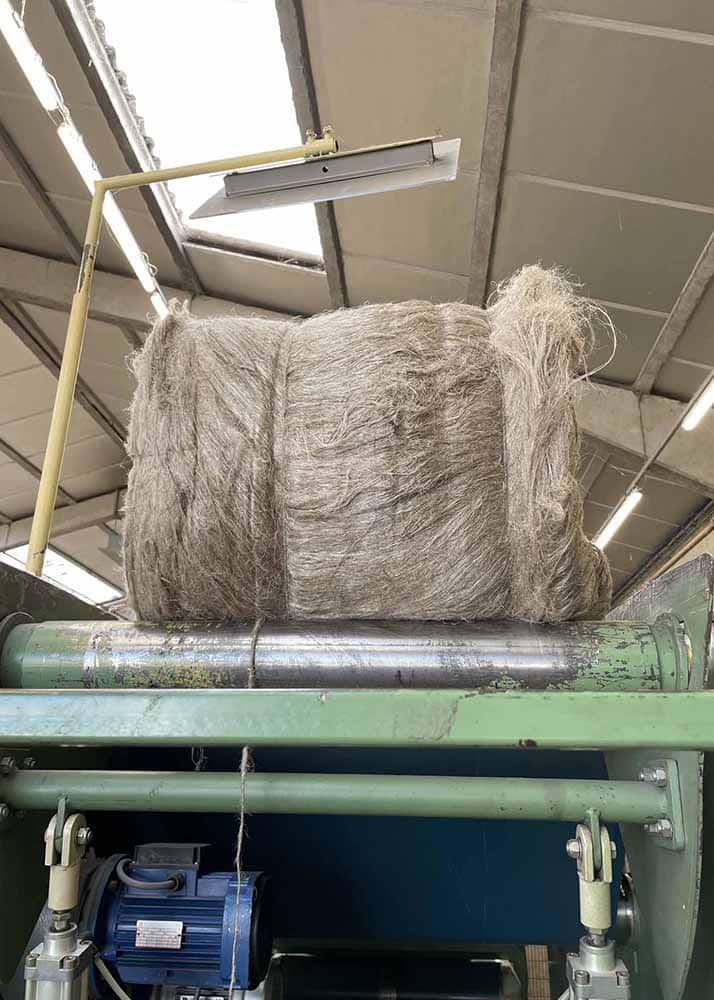
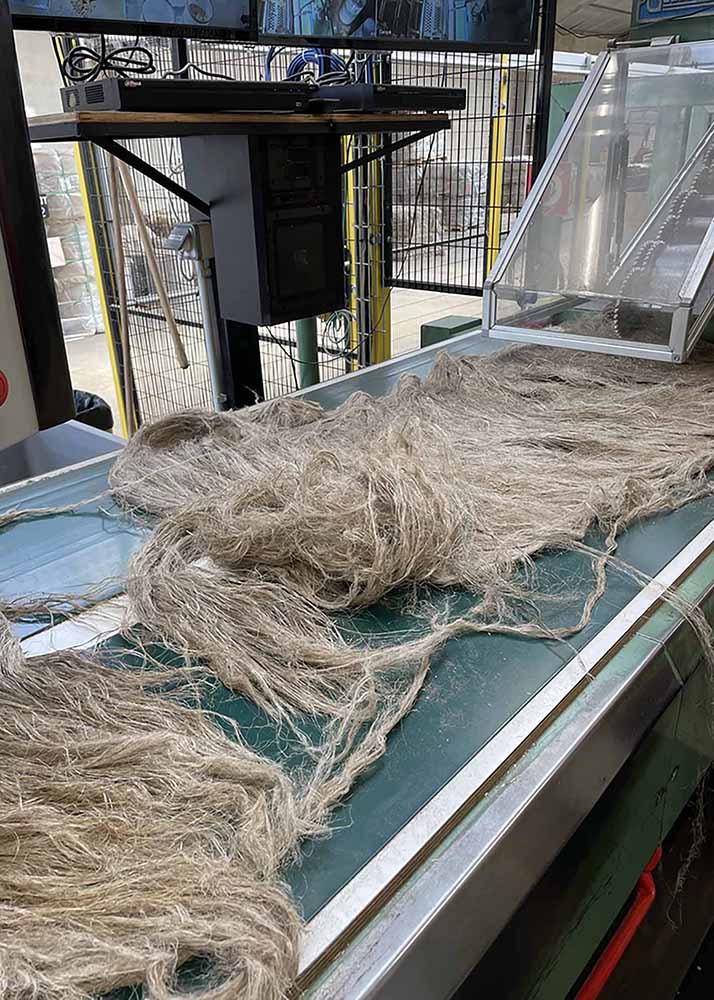
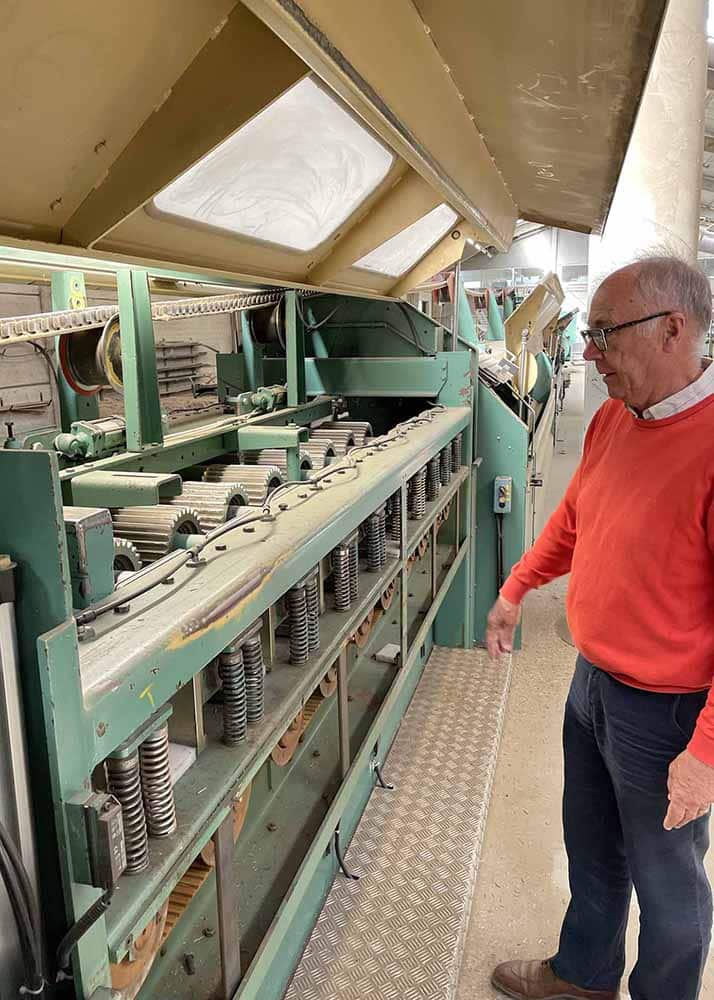
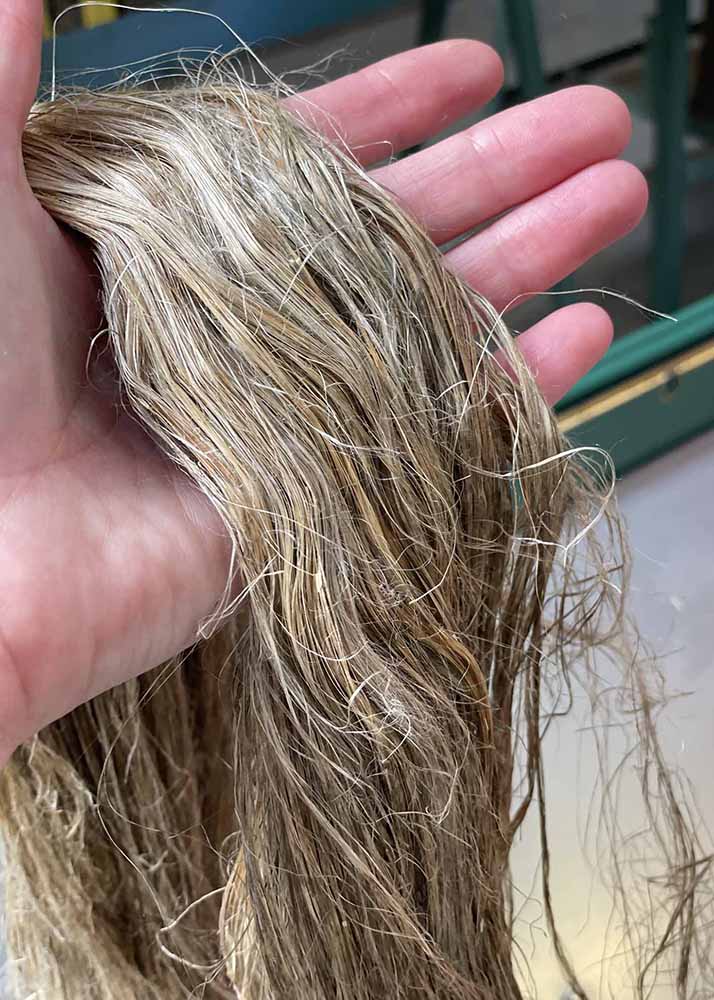
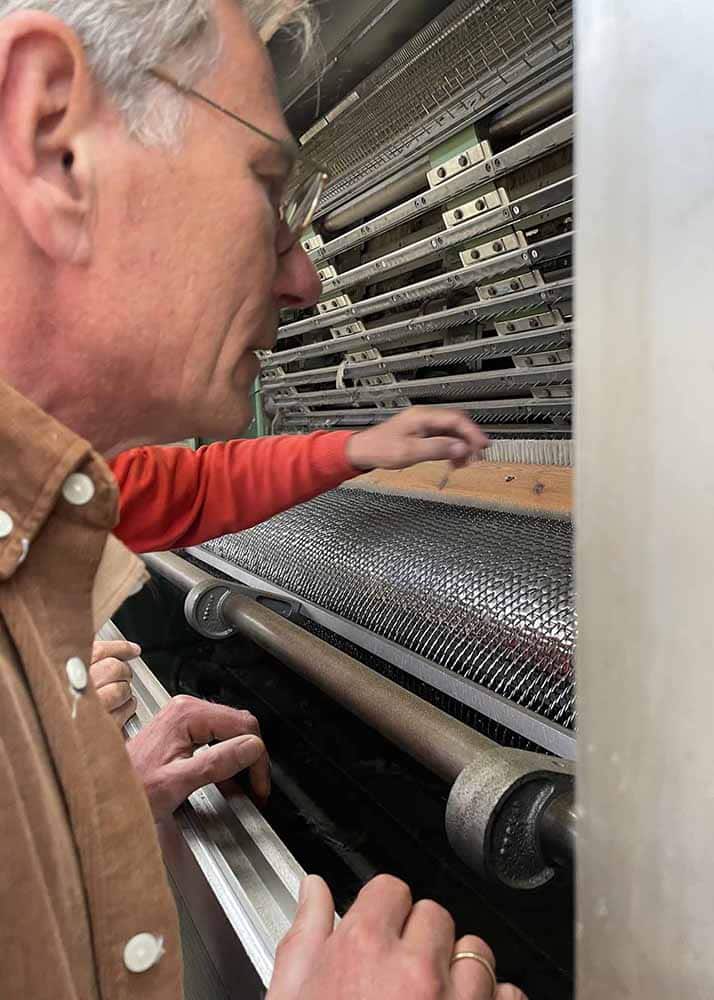
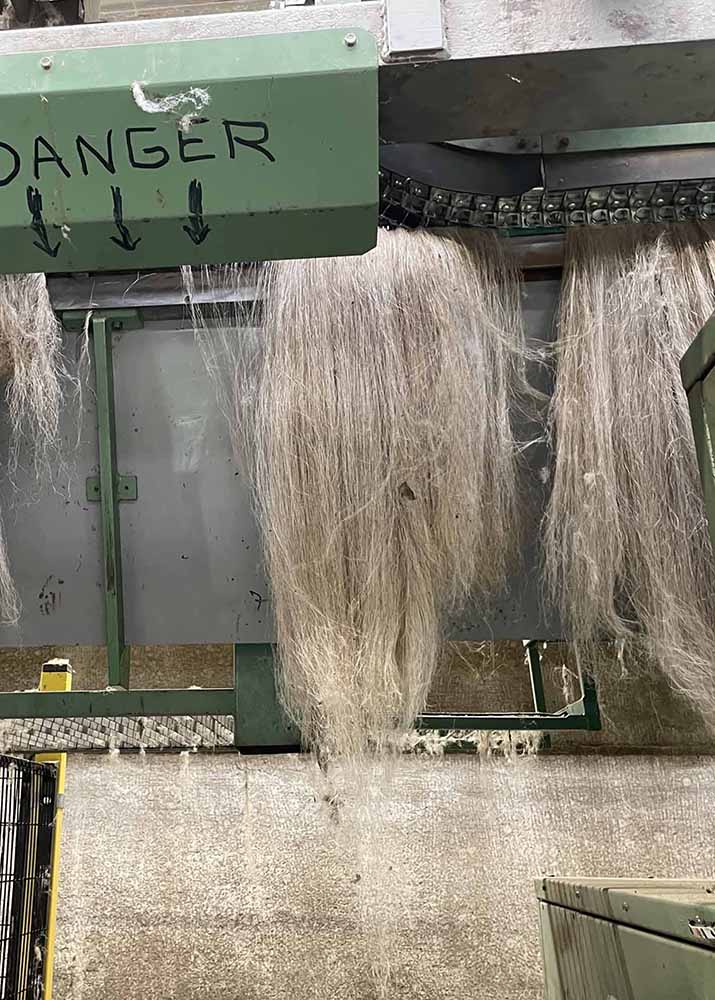
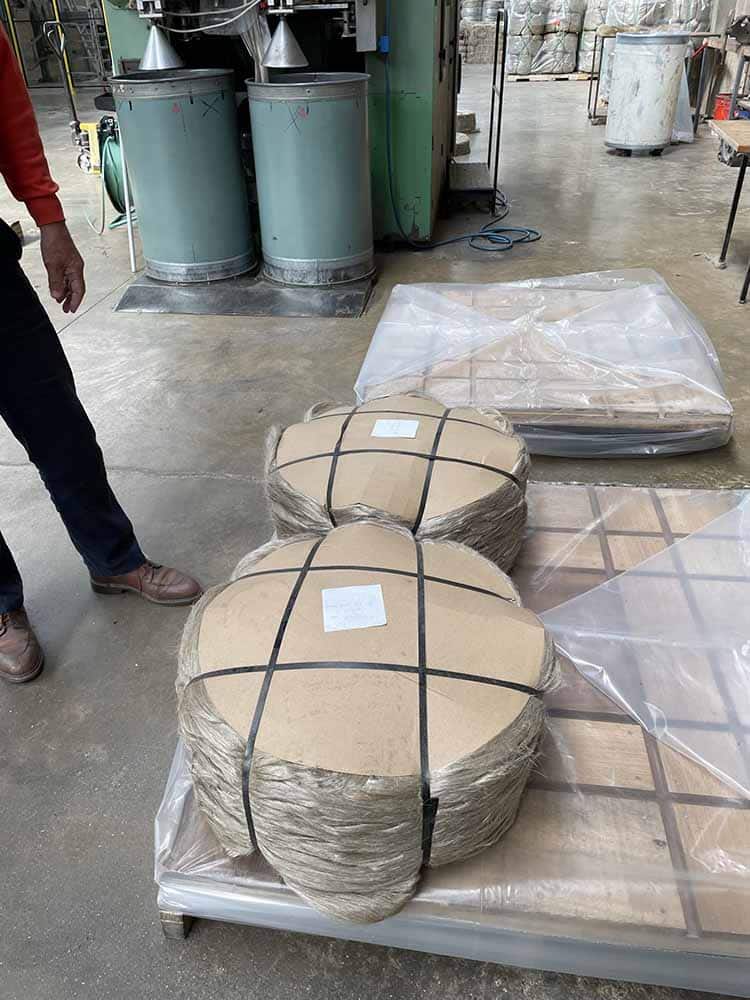
Président Directeur Général Jean-Louis Maurice (fantastic title, that's something) was incredibly welcoming and showed us around the factory himself.
At the factory they process flax from 8,000 hectares (!) into short and long fibers which are sent to Tunisia to be spun and woven for Italian manufacturers (or maybe it is woven in Italy, it got lost in the language). The short fibers are used for coarse materials, and the fine ones for textiles for clothing. You can read about the process by clicking on the photos above.
The Flax Weaving Museum on Funen
On our way home from France, we had planned a visit to the Linen Museum to see Lotte Dalgaard's exhibition "Bride". Lotte has woven the most amazing showpieces from 100-year-old linen. The exhibition has long since closed at the Linen Museum, but promise yourself to see it if you come across it somewhere else.
At the Linen Museum it is often possible to see a live exhibition where an employee talks about linen production (they have their own production) and where you can see the amazing damask looms in operation. Fantastic exhibition place run by volunteers. Impressive!
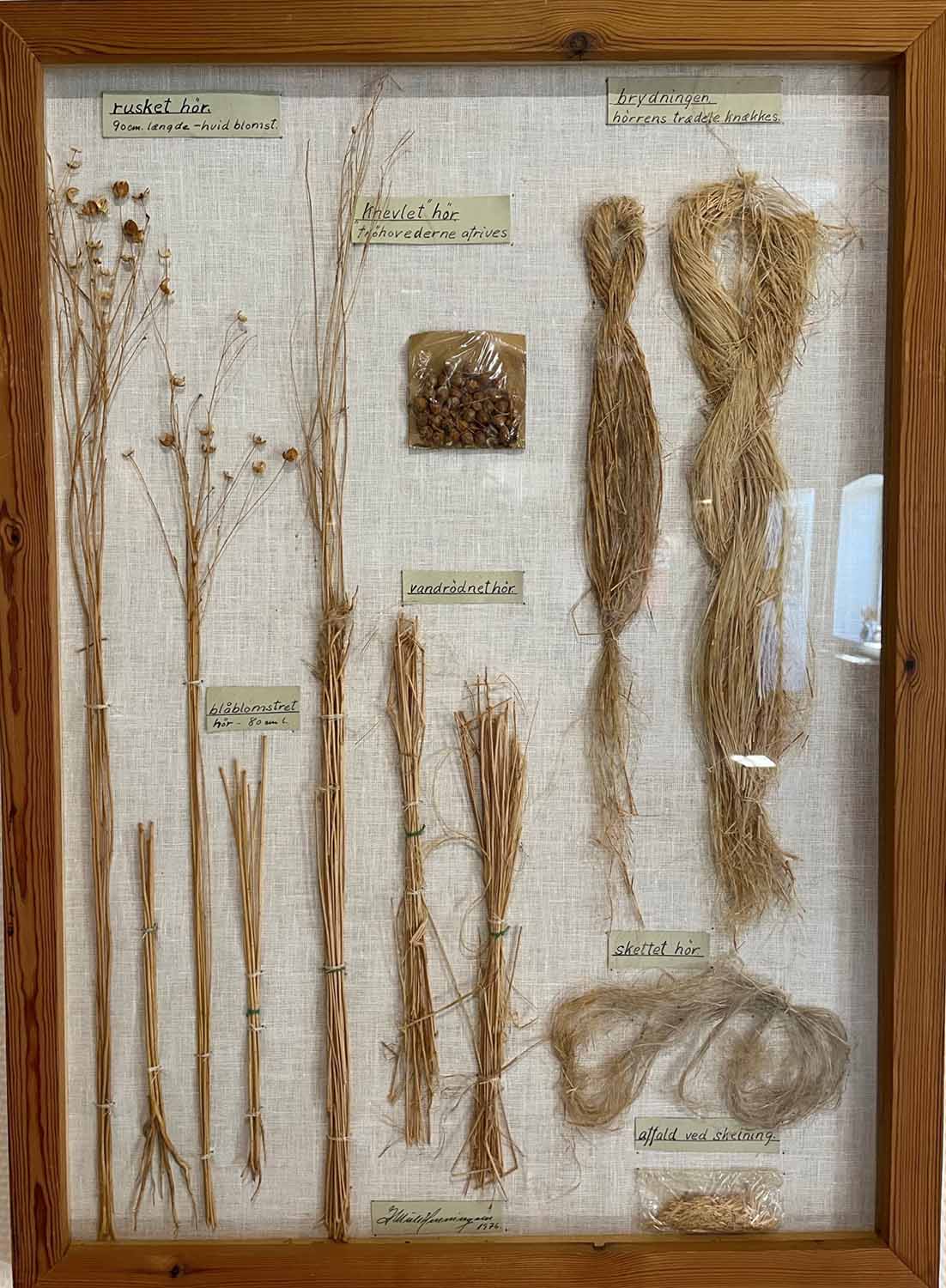
On the right you can see a board from the Flax Weaving Museum that shows the ancient processes from plant to spun flax – exactly the process we saw in France.
Be curious when you travel – I promise you will have the most amazing experiences on the road. AND there are always some machines involved when we talk about weaving, and related activities, so there is also something for your husband and children to experience on the road. Have a great trip!

My linen products
My dishcloths are woven from 100% linen.
A hand-woven dishcloth made of linen has fantastic properties. It absorbs liquid effectively, dries quickly and linen is bacteriostatic, which means that it is antibacterial, and thus bacteria cannot develop as well in the dishcloth. Linen fibers are long and provide a textile that is very durable. Linen is a natural material, and when they are eventually worn out, they can be composted.
Buy them here: Handwoven dishcloths or weave them yourself: recipe